The AI Playbook for Salons and Spas in Kenya: How AI Fills Your Chairs, Kills No-Shows and Books Clients While You Work
Kenyan salons and spas lose hundreds of thousands a month to ringing phones and empty chairs. Here's how an AI receptionist answers every call, books every client, and kills no-shows — with real Nairobi numbers.
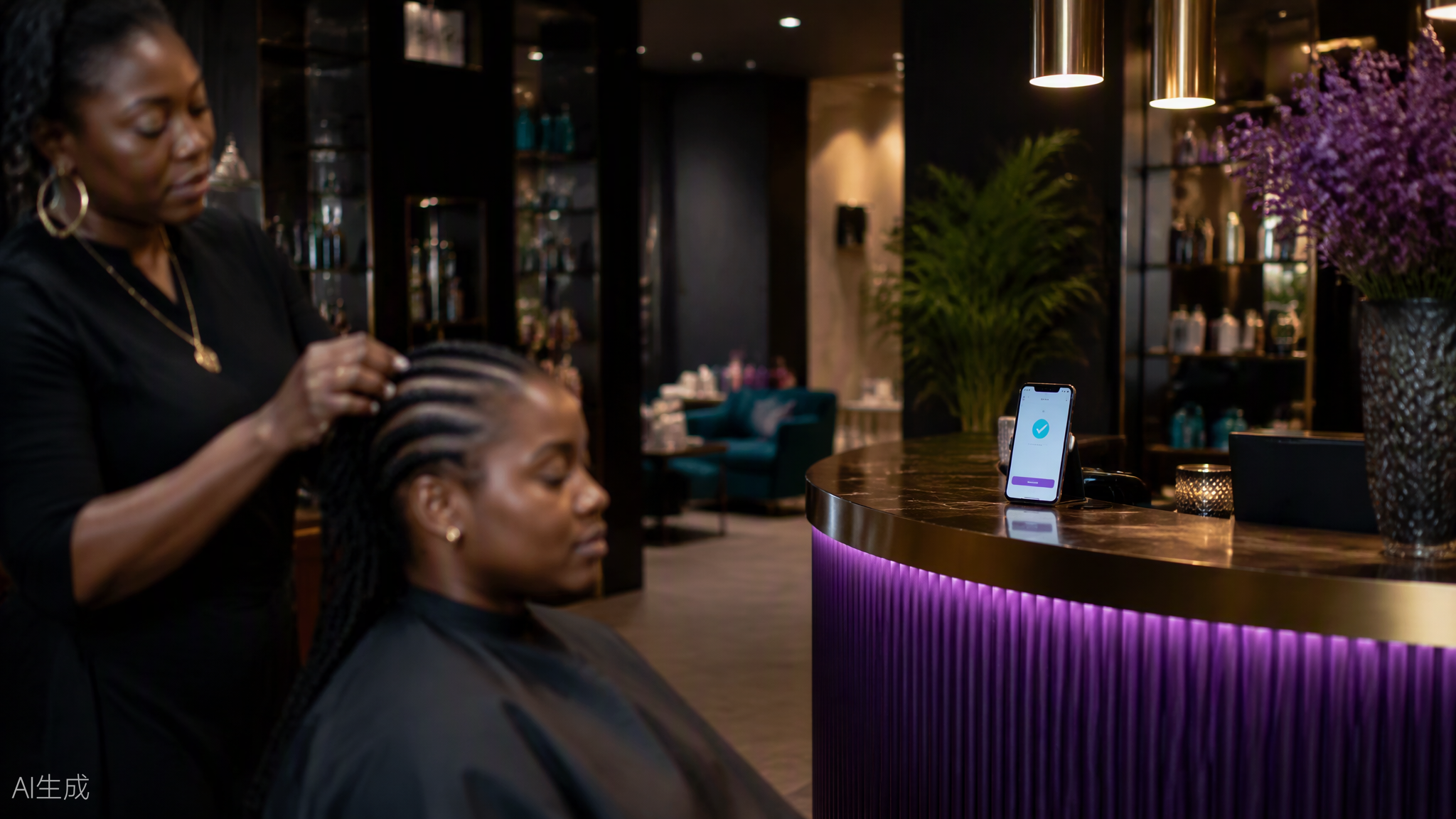
It's 10:40 on a Saturday morning at a salon in Kilimani. Wanjiku has both hands buried in a client's knotless braids — a KES 6,500 job that will take four hours. Her phone buzzes on the counter. Then it rings. Then it buzzes again.
She can't pick up. Her junior is washing a client's hair at the basin. The walk-in at the reception is asking how long for a blow-dry. The phone rings out.
That caller wanted to book a full spa day for two — massage, facials, pedicure. Call it KES 18,000. She hangs up, googles "spa near me," and books the next place on the list. Wanjiku never even knows she lost her.
If you run a salon or spa in Kenya, you don't need to imagine this scene. You lived it last Saturday. And the Saturday before that.
Your Best Hours Are Your Busiest — and That's the Problem
Here's the cruel arithmetic of the beauty business: the hours when your phones ring hardest are exactly the hours when nobody can answer them.
Saturday mid-morning. Weekday evenings after office hours. The lunch-hour rush. Your hands are in someone's hair, someone's nails, someone's shoulders — and your booking line is ringing itself silly.
Industry data on small service businesses is brutal on this point: most callers who reach voicemail do not leave a message and do not call back. They call the next salon. In a business where a new client relationship can be worth KES 50,000 a year in repeat visits, every unanswered ring is a tiny funeral.
And the phone is only half of it. The clients you did book have their own leak: the no-show.
Want to see this working on your own business? Get a free AI demo call at https://wedialai.com/demo-credits — it takes two minutes and costs nothing.
The Real Cost of a Silent Phone and an Empty Chair
Let's put Kenyan numbers on it.
A wash-and-blow-dry runs KES 800 to 2,000. Braids, KES 1,500 to 8,000. A weave or wig install, KES 3,000 to 15,000. Gel nails, KES 1,500 to 4,000. A full spa package, KES 8,000 to 25,000.
Now count the leaks. A mid-sized salon taking 30 booking calls a day misses maybe a third of them during peak hours — say 10 missed calls. If even four of those were real bookings averaging KES 3,500, that's KES 14,000 a day. Over a month of Saturdays and weekday evenings, you're looking at KES 300,000 to 400,000 in bookings that rang out and walked elsewhere.
Then the diary you did fill: a 15% to 25% no-show rate is normal for salons that don't confirm appointments. Ten empty slots a week at KES 3,500 is another KES 140,000 a month evaporating — while your rent, your stylists' commissions, and your products sit there fully paid for and producing nothing.
Add it up and a typical Nairobi salon or spa is leaving something close to half a million shillings a month on the table. Not to a competitor with better braids. To a ringing phone and an unconfirmed diary.
Why "Just Hire a Receptionist" Doesn't Fix It
The obvious answer is a front-desk person, and many salons try it. It helps — between 9 and 5. But a receptionist costs KES 25,000 to 45,000 a month, takes lunch, gets stuck with a walk-in while the phone rings, and goes home at exactly the hour your future clients are lying in bed scrolling Instagram, ready to book.
Because that's the other thing about this business: a huge share of booking intent happens after hours. 9 PM. 11 PM. Sunday afternoon. The bride-to-be planning her week, the executive who finally has a free Saturday. Nobody is answering your phone then — but somebody's AI is answering theirs.
What an AI Receptionist Actually Does for a Salon
Strip away the hype and an AI receptionist is very simple: it's a trained voice (and WhatsApp) front-desk that never has its hands full. Here's what that looks like in a Kenyan salon or spa, day to day.
It answers every call, every time. Peak Saturday, 11 PM, public holiday — the phone is picked up on the second ring, in a warm, natural voice, in English or Kiswahili. The client books, asks about prices, or checks your location, and hangs up satisfied.
It books straight into your diary. The AI knows your services, your prices, your stylists, and your opening hours. "I want knotless braids with Wanjiku on Saturday morning" becomes a confirmed slot with the right duration blocked — not a vague promise to "call back."
It confirms and reminds on WhatsApp. Every booking gets an instant WhatsApp confirmation. Then a reminder 24 hours before, and another on the morning of the appointment. This one feature alone is why salons using AI reminders report no-show rates dropping from 20%+ to under 10%.
It makes rescheduling painless. A client who can't make it replies to the reminder or calls, and the AI moves the appointment in seconds. A rescheduled slot is revenue saved. A client who couldn't reach you is a no-show you never saw coming.
It backfills cancellations from your waitlist. Someone cancels a 2 PM spa slot at 10 AM? The AI offers it to the next client on the waitlist before the chair goes cold. Empty slots stop being write-offs and become recovery plays.
It can chase deposits. For long appointments — braids, installs, spa days — the AI can ask for an M-Pesa deposit at booking time. A client with KES 1,000 down shows up. Every time.
"But My Clients Want a Human"
This is the objection every salon owner raises, and it's fair. Your business is personal. Your clients are loyal to people, not software.
But watch what clients actually do. They don't call to chat — they call to book. They want to know: do you have a slot, how much, where are you. An AI that answers instantly, knows your price list cold, and confirms on WhatsApp in thirty seconds gives them a better experience than a human who puts them on hold with a head of wet hair in her peripheral vision.
And the human touch isn't going anywhere. The AI handles the logistics so your people can do the part that actually needs people: the consultation, the styling, the relationship. Clients who want to talk to you specifically get transferred or get a callback — the difference is now you actually call back, because you know they called.
As for cost: the maths is not close. A full AI front desk runs about KES 6,500 a month — roughly a quarter of a receptionist's salary — and it works 168 hours a week, including every Saturday and every 11 PM Instagram-inspired booking urge.
What This Looks Like in Practice
Picture the same Saturday at Wanjiku's salon, six weeks later.
10:40 AM. Hands in braids. Phone rings. The AI picks up: spa day for two, next Saturday, 10 AM. It checks the diary, books the massage room and both therapists, sends a WhatsApp confirmation, and requests a KES 3,000 M-Pesa deposit. Paid in four minutes.
11:15 AM. A client due at 2 PM replies to her reminder: can't make it. The AI offers her Thursday evening instead — she takes it — then messages the waitlist. The 2 PM slot is refilled by 11:20.
9:47 PM. A first-time client calls after seeing the salon's Instagram. The AI answers, quotes the braid prices, books her for Tuesday after work, and sends the location pin on WhatsApp.
Wanjiku never touched her phone. She also never lost a booking.
The Playbook, Step by Step
If you want this running in your salon or spa, the path is short:
First, list your services with real durations and prices — this becomes the AI's brain. Second, connect your booking diary so the AI sees live availability. Third, switch on WhatsApp confirmations and reminders. Fourth, turn on deposits for any appointment over an hour. Fifth, let it run for a month and compare: missed calls answered, no-show rate, slots backfilled.
Most salons see the difference in the first weekend.
Frequently Asked Questions
Will my clients know they're talking to an AI? The voice is natural and conversational, and most callers simply experience it as "the salon answered immediately." What matters to them is getting booked in fast.
What if a client asks something complicated? The AI handles bookings, prices, hours, directions, and rescheduling. Anything outside that — a complaint, a custom bridal package — gets transferred to you or logged with a callback request. Nothing falls through.
Does it work with WhatsApp, or only calls? Both. Clients can call and talk, or message and book — the same diary, the same confirmations, the same reminders.
How long does setup take? A salon with a clear service menu is typically live within days, not months. You don't change how you work; you just stop missing the phone.
Every Ring Is Revenue
The beauty business in Kenya is won by whoever answers. Not the best braider, not the plushest spa — the one whose phone never rings out and whose diary never quietly empties.
That's exactly what WeDial AI builds: AI receptionists that answer every call, book every client, confirm on WhatsApp, cut no-shows, and backfill cancellations — 24/7, in English and Kiswahili, for less than a quarter of a receptionist's salary.
Start your 14-day free trial at wedialai.com and let next Saturday's phone ring. This time, somebody will pick it up.
One practical AI tip for your business, every week
The WeDial Weekly — every Sunday morning. No spam, unsubscribe anytime.
About the author
Peter Wafula is the founder of WeDial AI — a Nairobi-built platform of AI voice and chat agents that answer every call for businesses in 52 languages. He writes from hands-on experience deploying AI agents for real businesses.
Never miss another customer call
See how WeDial AI answers, qualifies, and books for your business — 24/7, in English and Swahili.
Get Free Demo CreditsRelated articles
The WeDial Wallet: Transparent, Pay-As-You-Grow AI Pricing
Most AI vendors hide their pricing. WeDial AI publishes it: three monthly minute wallets from $49, a flat $0.176/min domestic overage and…
This Week in AI Voice: 5 Stories That Mattered (Oct 5–11, 2026)
ElevenLabs at $22B, agents that chase unpaid invoices, India's voice-to-WhatsApp playbook and the UK's non-compete ban — the week in AI…
This Week in AI Voice: 5 Stories That Mattered (Sep 28–Oct 4)
Microsoft's real-time voice model, OpenAI's always-on dots agents, the FTC's AI-agent probe, Gemini Skills and a $350M raise — this week…