The AI Playbook for Law Firms in Kenya: Answer Every Client Call, Fill Your Consultation Calendar and Never Lose a Brief to Court Hours
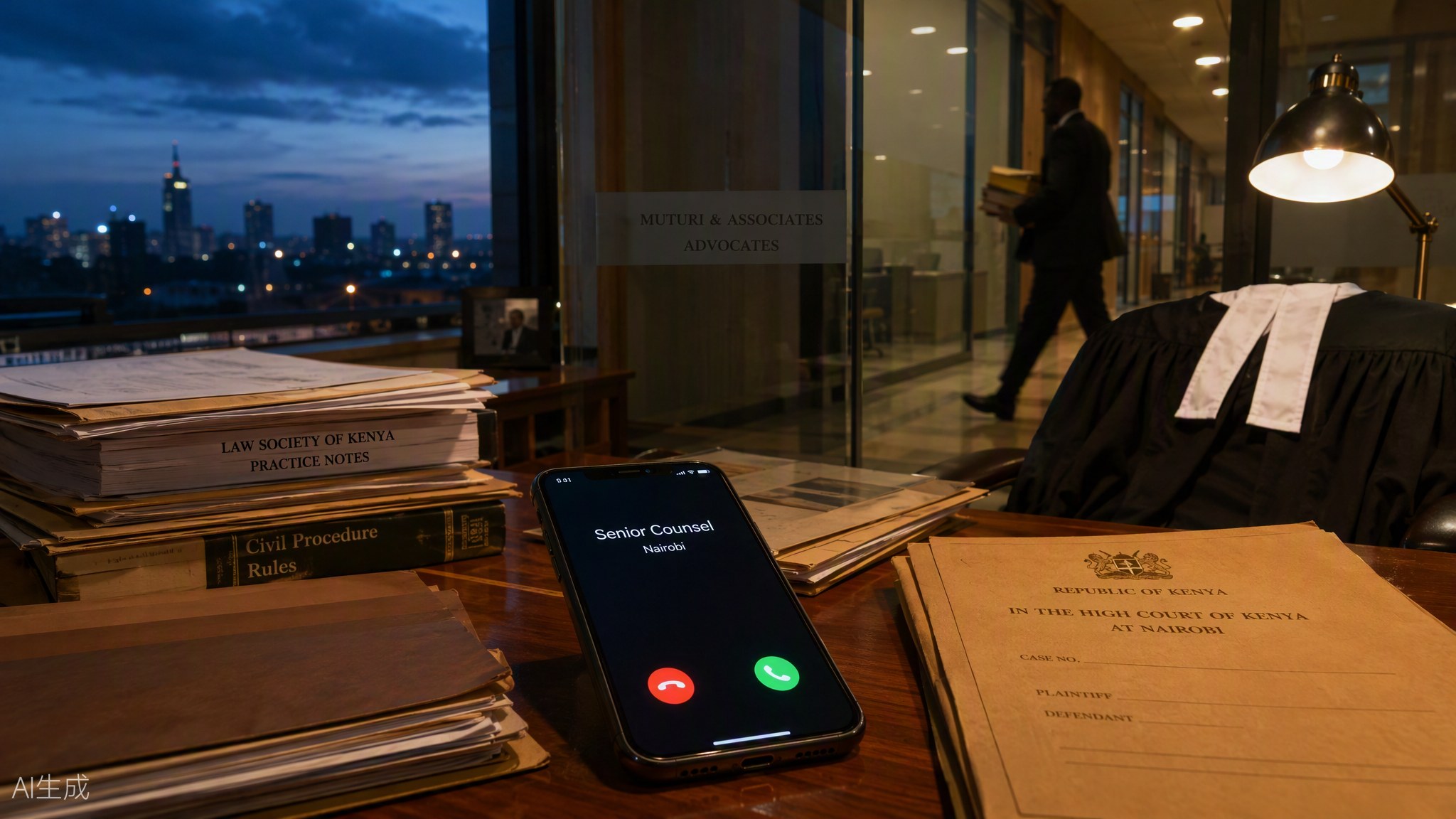
Kenyan law firms lose KES 1 million a month to calls nobody can answer — because advocates are in court and legal emergencies happen at night. Here's how an AI receptionist intakes every client, in English and Kiswahili, 24/7.
It's 4:47 on a Friday afternoon in Nairobi's CBD. A businessman has just watched KRA officials slap a notice on his premises, and his suppliers' cheques are due Monday. He does what every Kenyan does in a legal emergency: he searches "advocate near me" and starts calling.
First firm: the phone rings out — the receptionist left at 4:30. Second firm: "The advocate is in court, please call on Monday." Third firm: engaged tone. The fourth firm on the list has an AI receptionist. It answers on the second ring, takes his full details, understands the urgency, and books him a Saturday 9 AM consultation — with a WhatsApp confirmation and the office location pin landing on his phone before he's even finished breathing.
By Monday morning, that firm has a litigation client worth KES 300,000 in fees. The first three firms never knew he existed.
Why Law Firms Miss More Calls Than Almost Any Business
The legal profession has a structural problem that no hiring decision can fix: the people clients pay to talk to are almost never available to answer the phone.
Advocates spend their days in court, in chambers, in client meetings, at the lands registry, at the DPP's office — everywhere except at a desk near a ringing phone. Court phones go on silent. Client meetings can't be interrupted. And the receptionist? She's handling walk-ins, filing, photocopying, running documents to Sheria House, and managing three phone lines alone.
Then there's the timing problem — and it's brutal. Legal emergencies don't respect office hours. Arrests happen at night. Accidents happen on weekends. Illegal evictions happen at dawn. A spouse served with divorce papers panics at 9 PM, not 9 AM. The Kenyan in the diaspora trying to stop a fraudulent land sale in Ruai is calling at 3 AM Kenyan time because that's when their US workday ended.
Small businesses generally miss 20% to 35% of their calls. For law firms, the figure is often worse — and 85% of callers who don't get through never call back. They simply instruct the firm that answered.
Want to see this working on your own business? Get a free AI demo call at https://wedialai.com/demo-credits — it takes two minutes and costs nothing.
What a Missed Call Actually Costs a Law Firm
Let's price this honestly, using real Kenyan legal market figures:
- Initial consultation: KES 3,000 to KES 10,000
- Company registration and compliance setup: KES 30,000 to KES 60,000
- Conveyancing on a land or property transaction: KES 50,000 to KES 150,000 (often 1–2% of value)
- Family law matters (divorce, custody, succession): KES 50,000 to KES 300,000
- Commercial litigation retainer: KES 100,000 to KES 500,000+
Now the multiplier that makes this painful: a legal client is never one transaction. The conveyancing client becomes your company's secretarial client, then your litigation client, then refers their chama, their church, and their cousin who's buying land in Kitengela. One answered call can be worth KES 500,000 over five years.
If your firm misses just 3 serious inquiries a week — a modest number for a firm without dedicated intake — and each converted client averages KES 80,000 in first-year fees, you're watching roughly KES 1 million a month walk to the firm down the corridor. Not because they're better lawyers. Because they answered.
What an AI Receptionist Does for a Law Firm
To be clear about what this is not: an AI receptionist does not give legal advice, does not discuss case strategy, and does not replace your legal mind. What it does is the front-desk work that wins clients before the legal work even begins:
- Answers every call on the second ring, 24/7 — including nights, weekends, public holidays, and the 3 AM diaspora calls
- Conducts professional client intake: captures the caller's name, contacts, the nature of the matter (conveyancing, family, employment, criminal, commercial), the urgency, and key dates — a proper brief before you ever sit down
- Books consultations directly into your calendar and sends WhatsApp confirmations with your office location and what documents the client should carry
- Triages urgency: a caller whose relative is in police custody tonight gets flagged to you immediately; the caller asking about a will next month gets a calm Tuesday appointment
- Answers your firm's fifty most common questions: consultation fees, practice areas, location, parking, "do you handle land cases in Machakos?"
- Follows up with consultation no-shows and rebooks them — because a client who missed Tuesday's appointment is still a client
Your receptionist keeps handling the walk-ins and the filing. The AI makes sure no caller ever hears silence.
A Week in the Life: Before and After
Before: A three-advocate firm on Kimathi Street. Monday to Friday, the receptionist fields calls between walk-ins. Court days mean the advocates are unreachable from 8 AM to 4 PM. Saturday, the phone rings eleven times in an empty office. Sunday night, a diaspora client calls about a succession matter — no answer. In one week: 34 calls missed or abandoned. Two were conveyancing inquiries. One was a company that needed a retainer lawyer for a tender dispute.
After: Same firm, same week. The AI answers all 34 plus the 21 that came during office hours. Every caller is intaken, categorized, and booked or scheduled for callback. The diaspora client gets a 3 AM intake and a Monday video consultation booked automatically. The tender dispute company books a Tuesday meeting. The week's result: 9 consultations on the calendar, 4 new matters opened, and a call log showing the partners exactly how much demand was previously evaporating.
The advocates changed nothing about how they practice law. They just stopped losing the clients they never knew were calling.
"But Legal Clients Want a Human Touch"
Every senior partner raises this, and it deserves a straight answer: clients don't choose the most human-sounding firm. They choose the firm that responded first and treated their problem as urgent.
What does a caller in a legal emergency experience today at most firms? Ringing out. A receptionist too busy to take details properly. "Call back next week." A WhatsApp message read at 9 PM and answered three days later. Against that reality, a calm, professional voice that answers immediately, takes their matter seriously, books them in, and confirms on WhatsApp within seconds feels MORE human, not less.
The human touch happens in the consultation room, where it matters — with an advocate who now has the client's full intake brief in hand. And for the firms worried about confidentiality: the AI intake captures contact and matter details only, the same information your receptionist writes on a message pad, and it never offers legal opinions.
The Numbers: AI vs Front-Desk Staff
A competent legal receptionist in Nairobi costs KES 35,000 to KES 60,000 a month, plus statutory contributions — and still leaves at 5 PM, takes lunch when three calls come in, goes on leave, and resigns after eighteen months of training. Even the best one cannot answer the phone at 3 AM when your diaspora client calls.
An AI receptionist from WeDial AI costs a fraction of that, works all 168 hours of the week, speaks to clients in English and Kiswahili, and turns after-hours silence into booked consultations. It doesn't replace your front desk — it catches everything your front desk physically cannot.
Getting Started: Your First Two Weeks
There's no software to install and no change to how you practice:
- Day 1: You give us your practice areas, consultation fees, office hours, and booking preferences.
- Days 2–3: We configure your AI receptionist — your firm's name, intake questions, urgency rules, calendar, and WhatsApp confirmations.
- Day 4: Every call starts getting answered. Every inquiry gets intaken. Every consultation gets booked.
- Week 2: You open the call log and see, in black and white, the clients your firm was losing. Most managing partners go quiet when they see that list.
The phones of Kenya's law firms ring every night and every weekend with clients who need help urgently. Right now, those calls are choosing your competitors.
Make sure they choose you instead — book a free demo at wedialai.com and hear exactly what your next client will hear.
One practical AI tip for your business, every week
The WeDial Weekly — every Sunday morning. No spam, unsubscribe anytime.
About the author
Peter Wafula is the founder of WeDial AI — a Nairobi-built platform of AI voice and chat agents that answer every call for businesses in 52 languages. He writes from hands-on experience deploying AI agents for real businesses.
Never miss another customer call
See how WeDial AI answers, qualifies, and books for your business — 24/7, in English and Swahili.
Get Free Demo CreditsRelated articles
The WeDial Wallet: Transparent, Pay-As-You-Grow AI Pricing
Most AI vendors hide their pricing. WeDial AI publishes it: three monthly minute wallets from $49, a flat $0.176/min domestic overage and…
This Week in AI Voice: 5 Stories That Mattered (Oct 5–11, 2026)
ElevenLabs at $22B, agents that chase unpaid invoices, India's voice-to-WhatsApp playbook and the UK's non-compete ban — the week in AI…
This Week in AI Voice: 5 Stories That Mattered (Sep 28–Oct 4)
Microsoft's real-time voice model, OpenAI's always-on dots agents, the FTC's AI-agent probe, Gemini Skills and a $350M raise — this week…